

Neuro-Thrive Ingredients Investigated: 2026 Consumer Analysis Examines Neuro Thrive PQQ and Nootropic Formulation Disclosures
Independent Analysis Examines Neuro-Thrive Ingredient Transparency, Non-Prescription Cognitive Support Category Context, and Company-Reported Formulation Details as Consumer Research Into Brain Health Supplements Continues in 2026
New York, NY, Jan. 22, 2026 (GLOBE NEWSWIRE) -- Disclaimer: This article is for informational purposes only and does not constitute medical advice. Neuro-Thrive is a dietary supplement, not a prescription medication—these are fundamentally different categories. A commission may be earned if you purchase through links in this article.
Search Term Context: "Neuro-Thrive" and "Neuro Thrive PQQ" are used in this report to reflect common consumer search behavior and product naming. This analysis does not rank products, endorse outcomes, or predict results. It summarizes publicly available company disclosures and ingredient-level research for informational purposes only.
January is a period when consumer interest in cognitive wellness products often increases, including searches referencing brain health terminology and nootropic compounds. This report examines Neuro-Thrive as one example within the non-prescription cognitive support supplement category, focusing on ingredient disclosures, regulatory context, and research framing.
Why This Analysis Now: As consumers enter 2026 with renewed focus on health and wellness goals, cognitive support supplements continue to generate significant search interest. Public reporting and market research commentary frequently describe continued consumer interest in nootropics and brain health supplements across age groups. This analysis provides ingredient-level transparency to help consumers evaluate products within this growing category.
Previous independent reporting examining Neuro-Thrive explored the product's market positioning, Okinawan-inspired formulation origins, and general consumer reception within the memory support supplement category.
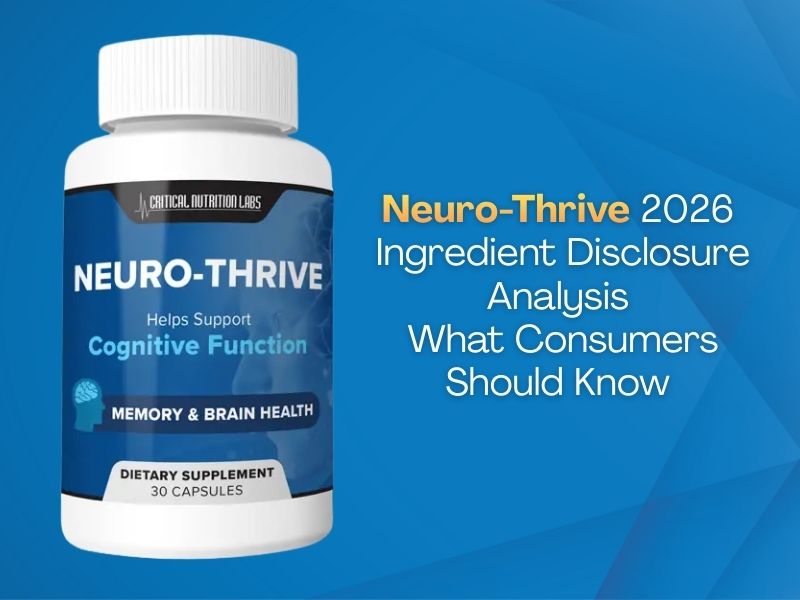
What "Nootropic" and "Cognitive Support" Mean in Supplement Marketing
Nootropics—sometimes called cognitive enhancers or "smart drugs"—is a broad category that encompasses both pharmaceutical compounds and dietary supplements. The term was coined in the 1970s and generally refers to substances that may support mental function, though definitions vary significantly.
Prescription cognitive medications such as those used for attention disorders or cognitive decline undergo extensive clinical trial processes and regulatory review. These pharmaceutical products are FDA-approved for specific medical indications and require prescriptions and medical supervision.
Dietary supplements like Neuro-Thrive operate under a different regulatory framework. Under the Dietary Supplement Health and Education Act (DSHEA), supplements are not required to undergo pre-market approval for efficacy. The use of "cognitive support," "brain health," and "memory" terminology in supplement marketing reflects conceptual positioning based on ingredient research and does not indicate FDA approval for treating any medical condition.
The categorical distinction: Products marketed as Neuro-Thrive or similar cognitive support supplements do not contain pharmaceutical compounds. They contain vitamins, botanical extracts, and other compounds that researchers have studied in neurological contexts—but these represent a fundamentally different category with different mechanisms, regulatory frameworks, and evidence standards. This distinction is important context when interpreting marketing claims in the supplement category.
Neuro-Thrive Ingredient Disclosure Review
According to the official Neuro-Thrive website at the time of publication, the Neuro-Thrive formula contains seven primary ingredients. The following reflects company-reported information and publicly available disclosures. Consumers searching Neuro-Thrive often look for detailed ingredient information to inform their evaluation.
PQQ (Pyrroloquinoline Quinone Disodium Salt) — 10 mg
What it is: Pyrroloquinoline quinone, commonly abbreviated as PQQ, is a compound that functions as a cofactor in certain enzymatic reactions. Researchers have studied it in the context of mitochondrial function and cellular energy metabolism.
What research has explored: Published studies in journals including the Journal of Biological Chemistry and Nutritional Neuroscience have examined PQQ in the context of mitochondrial biogenesis—the process by which cells increase mitochondrial mass. Some research has explored PQQ's relationship with nerve growth factor (NGF) and oxidative stress markers.
According to research published in Food Style 21, PQQ has been examined for its potential role in cognitive function parameters in human subjects, though studies vary in design and population size.
According to the company: The company references published research examining PQQ in relation to mitochondrial signaling pathways and nerve growth factor (NGF) in experimental settings. These references describe ingredient-level research and do not constitute evidence of effects from the finished Neuro-Thrive product.
Research context: These statements reflect the brand's description and are not clinical findings for the finished product. Ingredient-level studies examine isolated compounds under controlled conditions. Results from such research do not constitute evidence that Neuro-Thrive as a finished product will produce particular outcomes in individuals.
Bacopa Monnieri Extract (Whole Herb, Standardized to 50% Bacosides) — 300 mg
What it is: Bacopa monnieri is a perennial herb used in traditional Ayurvedic medicine. The active compounds, known as bacosides, have been subjects of cognitive research for several decades.
What research has explored: Studies published in journals including Psychopharmacology, Journal of Ethnopharmacology, and Neuropsychopharmacology have examined Bacopa monnieri in the context of memory consolidation, attention, and information processing speed. Research has explored its effects on dendritic branching in neurons.
A systematic review published in the Journal of Alternative and Complementary Medicine examined multiple clinical trials of Bacopa monnieri, noting that study designs and populations varied significantly.
According to the company: Neuro-Thrive references published research examining Bacopa's effects on dendritic arborization (branching of neurons) in experimental settings. The company describes dendrites as structures that allow neurons to communicate with each other. These references describe ingredient-level research findings and do not constitute evidence of effects from the finished Neuro-Thrive product.
Research context: These statements reflect the brand's description and are not clinical findings for the finished product. The 300 mg dosage with 50% bacoside standardization falls within ranges examined in published research, though individual responses vary.
Alpha GPC (Alpha Glycerylphosphorylcholine Powder) — 150 mg
What it is: Alpha GPC is a choline-containing compound that occurs naturally in the brain. Choline is a precursor to acetylcholine, a neurotransmitter involved in memory and attention processes.
What research has explored: Studies published in journals including the American Journal of Clinical Nutrition and Clinical Therapeutics have examined choline compounds in the context of cognitive function, particularly in populations with varying choline intake levels.
Research has examined Alpha GPC's bioavailability compared to other choline sources, noting its ability to cross the blood-brain barrier.
According to the company: Neuro-Thrive references Alpha GPC as a choline source. The company describes choline as a precursor to acetylcholine, a neurotransmitter researched in memory and attention contexts. These descriptions reflect ingredient-level research references and do not constitute evidence of effects from the finished product.
Research context: These statements reflect the brand's description and are not clinical findings for the finished product.
GABA (Gamma-Aminobutyric Acid) — 100 mg
What it is: GABA is the primary inhibitory neurotransmitter in the central nervous system. It plays a role in reducing neuronal excitability and is involved in sleep, relaxation, and stress response.
What research has explored: Published studies have examined oral GABA supplementation, though researchers have debated its ability to cross the blood-brain barrier in significant quantities when taken orally. Some research published in journals including Biofactors and Amino Acids has examined GABA's effects on stress markers and sleep quality.
Research from Japanese scientists, as referenced by the company, has examined GABA's relationship with memory and attention parameters.
According to the company: Neuro-Thrive references GABA as a neurotransmitter studied in relation to relaxation and sleep. The company also references Japanese research examining GABA in cognitive contexts. These descriptions reflect ingredient-level research references and do not constitute evidence of effects from the finished product.
Research context: These statements reflect the brand's description and are not clinical findings for the finished product. The oral bioavailability of GABA remains a topic of scientific discussion.
Vitamin D3 (as Cholecalciferol) — 20 mcg (100% DV)
What it is: Vitamin D3 is a fat-soluble vitamin that plays roles in calcium metabolism, immune function, and cellular processes throughout the body, including the brain.
What research has explored: Studies published in JAMA Neurology and other journals have examined associations between vitamin D status and cognitive function, particularly in aging populations. Research has explored vitamin D's relationship with neuroinflammation and neuroprotection.
According to the company: Neuro-Thrive includes vitamin D3 as part of its vitamin blend. The company references research examining vitamin D in cognitive contexts.
Research context: These statements reflect the brand's description and are not clinical findings for the finished product. While vitamin D deficiency has been associated with cognitive concerns in observational studies, supplementation research shows variable results.
Niacin (as Niacinamide) — 8 mg NE (50% DV)
What it is: Niacin, also known as vitamin B3, is essential for cellular energy metabolism. It plays a role in NAD+ production, a coenzyme involved in hundreds of metabolic reactions.
What research has explored: Studies have examined niacin's role in mitochondrial function and cellular energy production. Research has explored its relationship with cognitive function, particularly in the context of deficiency states.
According to the company: Neuro-Thrive includes niacin as part of its vitamin blend. The company references research examining B vitamins in cognitive and energy metabolism contexts.
Research context: These statements reflect the brand's description and are not clinical findings for the finished product.
Vitamin B6 (as Pyridoxine Hydrochloride) — 5 mg (294% DV)
What it is: Vitamin B6 is involved in over 100 enzyme reactions in the body, including neurotransmitter synthesis. It plays a role in the production of serotonin, dopamine, and GABA.
What research has explored: Studies published in Cochrane Database of Systematic Reviews and other sources have examined vitamin B6's relationship with cognitive function, particularly in combination with other B vitamins.
According to the company: Neuro-Thrive includes vitamin B6 as part of its vitamin blend for cognitive support and energy production.
Research context: These statements reflect the brand's description and are not clinical findings for the finished product.
Ingredient Dosage Context: How Neuro-Thrive Compares to Published Research
An important consideration when evaluating any supplement is how the disclosed dosages compare to amounts examined in published research. The following provides general context—not clinical guidance—for consumers researching these ingredients.
PQQ (10 mg): Published human studies have examined PQQ at dosages typically ranging from 10–20 mg daily. The 10 mg dosage in Neuro-Thrive falls at the lower end of this research range.
Bacopa monnieri (300 mg, 50% bacosides): Clinical studies of Bacopa monnieri have examined dosages typically ranging from 300–450 mg of standardized extract daily, often over 8–12 week periods. The 300 mg dosage in Neuro-Thrive falls within this range, and the 50% bacoside standardization reflects a concentrated extract.
Alpha GPC (150 mg): Published research on Alpha GPC has examined varying dosages, with some cognitive studies using 400–1200 mg daily. The 150 mg dosage in Neuro-Thrive is lower than some study protocols.
GABA (100 mg): Studies examining oral GABA supplementation have used varying dosages, typically in the 100–800 mg range. The 100 mg in Neuro-Thrive represents the lower end of this range.
Vitamins D3, B3, and B6: The vitamin dosages listed provide 50–294% of Daily Value, depending on the nutrient.
Important context: Research dosage comparisons provide general reference points only and are presented for informational purposes—not as assessments of adequacy or effectiveness. Individual responses vary significantly, and clinical study populations may differ substantially from supplement consumers. This comparison does not constitute a recommendation for any particular dosage and does not indicate expected outcomes from Neuro-Thrive use.
This analysis examines Neuro-Thrive ingredient disclosure as reported by the company. For complete formulation details, consumers can View the current Neuro-Thrive offer (official Neuro-Thrive page).
How Consumers Might Interpret the Ingredient Profile
Based on publicly disclosed ingredients and published research context, some consumers may interpret Neuro-Thrive's formulation as relevant to certain personal preferences or evaluation criteria. The following observations reflect ingredient profile characteristics—not recommendations or suitability assessments.
Ingredient Profile Characteristics Some Consumers May Find Relevant:
Non-stimulant formulation: Unlike some cognitive support products that include caffeine or other stimulants, Neuro-Thrive's disclosed formula does not contain caffeine. Some readers researching stimulant-free options may consider this characteristic relevant to their evaluation.
Mitochondrial research focus: The inclusion of PQQ at 10 mg reflects an ingredient studied in the context of mitochondrial biogenesis research. Consumers researching this area may find this inclusion relevant to their evaluation.
Botanical-inclusive formulation: The presence of Bacopa monnieri—an herb with historical use in Ayurvedic tradition—reflects a botanical approach. Consumers who research formulations that include traditional herbs may find this characteristic relevant.
Choline-source inclusion: Alpha GPC represents one delivery mechanism for choline, a nutrient researched in relation to acetylcholine. Consumers evaluating choline supplementation options may find this inclusion relevant to their research.
Considerations That May Inform Consumer Evaluation:
Regulatory classification awareness: Neuro-Thrive is a dietary supplement, not a prescription medication. Consumers with diagnosed cognitive conditions requiring medical treatment should work with healthcare providers rather than relying on supplements.
Medication interaction potential: As noted in the safety considerations section, several ingredients may interact with certain medications. Consumers taking thyroid medications, sedatives, anticholinergics, or blood pressure medications should consult healthcare providers before use.
Timeline expectations: According to company materials, the formula is intended for consistent use. Consumers seeking immediate effects may want to calibrate expectations accordingly.
Single-ingredient alternatives: Neuro-Thrive contains seven ingredients. Consumers who prefer to isolate specific compounds for targeted research may want to consider single-ingredient products.
Questions That May Inform Consumer Research
Before choosing any cognitive support supplement, consumers may find it useful to consider:
- Have I discussed cognitive concerns with a healthcare provider to rule out underlying medical conditions?
- Am I currently taking any medications that might interact with the disclosed ingredients?
- Are my expectations calibrated to what the research on these ingredients actually indicates?
- Have I compared the dosages in this product against what has been examined in published research?
- Do I understand that dietary supplement claims are not FDA-evaluated for treating medical conditions?
These considerations may help consumers conduct informed research aligned with their individual circumstances.
Understanding the Mitochondria-Brain Connection: Research Context
A central theme in Neuro-Thrive's marketing involves the relationship between mitochondria and brain function. Understanding the scientific context behind this positioning helps consumers evaluate the formula's rationale.
What mitochondria are: Mitochondria are organelles within cells that produce adenosine triphosphate (ATP), the primary energy currency of cells. The brain, despite representing approximately 2% of body weight, consumes approximately 20% of the body's energy. This high energy demand makes mitochondrial function particularly relevant to brain health research.
What research has explored: Published studies in journals including Free Radical Biology and Medicine, Journal of Neurochemistry, and Biochimica et Biophysica Acta have examined the relationship between mitochondrial function, oxidative stress, and cognitive aging. Some research has explored how mitochondrial dysfunction may contribute to age-related cognitive changes.
PQQ's relationship to this research: Pyrroloquinoline quinone has been studied for its potential role in mitochondrial biogenesis—the process by which cells create new mitochondria. Research published in the Journal of Biological Chemistry has examined PQQ's effects on signaling pathways related to mitochondrial proliferation.
Important limitations: This research represents ingredient-level investigation, often conducted in laboratory settings or specific clinical populations. Such findings do not constitute evidence that Neuro-Thrive as a finished product will affect mitochondrial function in consumers who take it.
The Okinawan Longevity Connection: Cultural Context
Neuro-Thrive's marketing references Okinawa, Japan, and positions the formula as inspired by traditional dietary practices associated with longevity. Understanding this cultural context helps consumers evaluate the product's positioning.
The Okinawan Blue Zone: Okinawa is one of the world's recognized "Blue Zones"—regions where populations demonstrate exceptional longevity. Research into Okinawan dietary patterns has identified traditional foods including natto (fermented soybeans), which is naturally rich in compounds including vitamin K2, nattokinase, and PQQ.
The "Memory Bean" reference: Neuro-Thrive's marketing describes natto as a "Memory Bean" and notes that Okinawans traditionally consume this food. The company positions PQQ as delivering benefits associated with this traditional food in a supplemental form.
Research context: While observational research has documented longevity patterns in Okinawan populations, attributing specific health outcomes to individual dietary components involves significant scientific complexity. Multiple lifestyle factors—including diet, physical activity, social connections, and stress management—contribute to population health outcomes.
Important distinction: Consuming a specific compound found in a traditional food is not equivalent to consuming the traditional food itself within the context of a complete dietary and lifestyle pattern. The Okinawan longevity association provides cultural context for the formula's inspiration but should not be interpreted as evidence that the supplement will produce comparable outcomes. These cultural and dietary observations provide historical context only and should not be interpreted as evidence that supplementation produces comparable longevity or cognitive outcomes.
Marketing Language vs. Ingredient Research
The distinction between marketing terminology and published ingredient research represents an important consideration for consumers evaluating Neuro-Thrive and similar cognitive support supplements.
Marketing materials for Neuro-Thrive reference memory support, mental clarity, and brain health concepts, with positioning inspired by Okinawan longevity traditions. The company references the "Japanese Memory Bean" (referring to natto, a fermented soybean food rich in PQQ) as the inspiration for the formula's core ingredient.
These descriptions represent brand positioning based on the company's interpretation of ingredient research. They are not clinical findings for the finished product and should not be interpreted as guaranteed outcomes.
Published research context: Studies examining individual ingredients like PQQ, Bacopa monnieri, and Alpha GPC have explored their effects in controlled laboratory and clinical settings. Such research examines isolated compounds at specific dosages and does not constitute evidence that any specific finished product containing those ingredients will produce particular outcomes in individuals.
Consumer evaluation context: Before purchasing any supplement positioned around cognitive support terminology, consumers benefit from understanding the distinction between ingredient-level research and product-level evidence, recognizing that dietary supplements and prescription medications represent different categories, and maintaining realistic expectations aligned with available research.
Safety and Interaction Considerations
Consumers evaluating Neuro-Thrive may want to consider potential interaction risks reported in scientific literature.
Bacopa monnieri: Research has explored Bacopa's effects on neurotransmitter systems. Potential interactions have been reported in the literature involving thyroid medications and certain sedatives. Healthcare provider consultation is advisable before use, particularly for individuals taking prescription medications.
Alpha GPC: As a choline source, Alpha GPC may interact with anticholinergic medications. Individuals taking medications that affect acetylcholine should consult their healthcare providers.
GABA: While generally considered safe, oral GABA may interact with anti-anxiety medications, sedatives, or blood pressure medications. Individuals on these medications should consult their healthcare providers.
Vitamin B6: At high doses over extended periods, vitamin B6 has been associated with nerve-related side effects. The dosage in Neuro-Thrive (5 mg, 294% DV) is below levels typically associated with concerns but represents 294% of Daily Value.
According to the company: Neuro-Thrive states that the formula consists of 7 natural, potent ingredients and is vegetarian-friendly, non-GMO, and manufactured in a GMP-certified facility. Healthcare provider consultation is always recommended before starting any new supplement.
Company-Reported Usage Information
The following reflects company-reported information and is not medical guidance.
According to the official Neuro-Thrive website, the company recommends taking one capsule per day. Each bottle contains 30 capsules, representing a 30-day supply.
According to the company, the ingredients are intended for consistent use over time. Individual responses vary, and no specific outcomes are guaranteed.
According to the company's FAQ, the brand does not state that diet changes are required to use the product. This is a general statement from the company and is not individualized guidance.
These statements reflect company-reported information only. Individual experiences vary significantly, and timeline references should not be interpreted as predictions of particular outcomes.
Company-Reported Availability Information
According to company-published information, Neuro-Thrive is sold directly through its official website, with pricing, shipping timelines, and refund terms subject to change. The company references a satisfaction guarantee in their materials.
Current availability, policies, and terms can be reviewed on the official Neuro-Thrive website.
Company and Distribution Information
According to published information on the Neuro-Thrive website, the product is manufactured by:
Company: Critical Nutrition Labs
Address: 15373 Roosevelt Blvd, Suite 203, Clearwater, FL 33760
Email: sales@criticalnutritionlabs.com
Phone: 1-727-351-3065
According to the company's published terms, the product is distributed through ClickBank, which serves as the retailer of products on the site. ClickBank is described as a registered trademark of Click Sales Inc., a Delaware corporation.
Manufacturing and Quality Claims Review
According to the official Neuro-Thrive website, the company makes several quality-related statements about the product's manufacturing:
GMP Certification: The company states that Neuro-Thrive is manufactured in a GMP-certified facility (company statement). GMP (Good Manufacturing Practices) refers to FDA regulations governing supplement manufacturing quality systems.
Location: According to company materials, the product is manufactured in the United States.
Formulation Characteristics: The company describes Neuro-Thrive as vegetarian-friendly, non-GMO, gluten-free, dairy-free, and caffeine-free.
Third-Party Testing: The company states the product does not contain "toxic heavy metals or nasty bacteria," though specific third-party testing certifications are not detailed on the website.
No Proprietary Blend: The company explicitly states they do not use proprietary blends, describing this as intentional transparency about ingredient amounts.
Consumer verification: Consumers seeking additional documentation regarding manufacturing certifications, third-party testing reports, or quality assurance protocols may wish to contact the company directly using the contact information provided.
Consumer Evaluation Questions
Before purchasing Neuro-Thrive or any cognitive support supplement, consumers may benefit from considering several questions:
Have I compared the marketing language against the actual ingredient disclosure and published research?
Do I understand the distinction between dietary supplements and prescription cognitive medications?
Have I consulted a healthcare provider about my wellness goals and whether supplementation is appropriate for my individual situation?
Are my expectations aligned with what published research indicates about ingredient-level findings versus product-level outcomes?
Have I reviewed the complete return policy and terms on the official Neuro-Thrive website?
Do I take any medications that might interact with the disclosed ingredients, particularly those affecting neurotransmitter systems?
These considerations help consumers make informed decisions aligned with their individual circumstances and expectations.
Summary Takeaways
Neuro-Thrive represents one product within the broader non-prescription cognitive support supplement category. Consumers researching Neuro-Thrive should understand several key considerations:
Regulatory Classification: Neuro-Thrive is a dietary supplement, not an FDA-approved medication. The use of "cognitive support," "brain health," and "memory" terminology in supplement marketing reflects conceptual positioning and does not indicate FDA approval for treating any medical condition.
Ingredient Disclosure: According to the official Neuro-Thrive website at the time of publication, the Neuro-Thrive formula contains PQQ (pyrroloquinoline quinone disodium salt), Bacopa monnieri extract (standardized to 50% bacosides), Alpha GPC, GABA, Vitamin D3, Niacin, and Vitamin B6.
Research Context: Published studies have examined these ingredients in various cognitive and neurological contexts. Ingredient-level research does not constitute evidence that Neuro-Thrive as a finished product will produce particular outcomes. The finished product has not been independently clinically studied as a complete formulation.
Consumer Evaluation: Before purchasing Neuro-Thrive, consumers may find it useful to understand product classifications, compare marketing language against ingredient disclosures, consult healthcare providers, and calibrate expectations to available research rather than marketing positioning.
Health management decisions should occur with physician guidance. Prescription medications should not be changed or discontinued without medical supervision.
Consumers can View the current Neuro-Thrive offer (official Neuro-Thrive page) to review manufacturer-published information including ingredient details, usage instructions, shipping policies, and refund procedures.
Frequently Asked Questions: Neuro-Thrive Consumer Information
The following questions and answers reflect common consumer inquiries about Neuro-Thrive, based on publicly available company disclosures and general supplement category context.
What category of product is Neuro-Thrive?
Neuro-Thrive is marketed by the company as a dietary supplement positioned around "cognitive function," "memory," and "brain health" terminology. As a supplement, it is not FDA-approved to diagnose, treat, cure, or prevent disease.
What ingredients are in Neuro-Thrive?
According to the official Neuro-Thrive website, the formula contains seven ingredients: PQQ (pyrroloquinoline quinone disodium salt) at 10 mg, Bacopa monnieri extract (standardized to 50% bacosides) at 300 mg, Alpha GPC at 150 mg, GABA at 100 mg, Vitamin D3 at 20 mcg, Niacin at 8 mg NE, and Vitamin B6 at 5 mg.
Does Neuro-Thrive use a proprietary blend?
According to the company's FAQ, Neuro-Thrive does not use a proprietary blend. The company states this is intentional to provide transparency about what consumers are taking. All ingredient amounts are disclosed on the Supplement Facts panel.
How should Neuro-Thrive be taken?
According to company disclosures, the recommended serving size is one capsule per day. Each bottle contains 30 capsules, representing a 30-day supply.
Who manufactures Neuro-Thrive?
According to the company's published information, Neuro-Thrive is manufactured in a GMP-certified facility in the United States by Critical Nutrition Labs, located in Clearwater, Florida.
What is the return policy?
According to company disclosures, Neuro-Thrive references a satisfaction guarantee in their materials. Consumers should verify current return policy terms directly on the official website before purchasing.
Is Neuro-Thrive vegetarian-friendly?
According to the company, Neuro-Thrive uses vegetable capsules (hypromellose) and is described as vegetarian-friendly and non-GMO.
Can Neuro-Thrive be taken with other supplements or medications?
The company recommends consulting a healthcare provider before starting Neuro-Thrive, particularly for individuals taking medications or managing health conditions. As noted in the safety considerations section of this report, several ingredients may interact with certain medications.
Contact Information
For questions about Neuro-Thrive, according to the company's published information:
Company: Critical Nutrition Labs
Address: 15373 Roosevelt Blvd, Suite 203, Clearwater, FL 33760
Customer Support Email: sales@criticalnutritionlabs.com
Phone: 1-727-351-3065
Disclaimers
FDA Health Disclaimer: These statements have not been evaluated by the Food and Drug Administration. This product is not intended to diagnose, treat, cure, or prevent any disease. Dietary supplements are not FDA-approved treatments for cognitive decline or any health condition. Always consult your physician before starting any new supplement, especially if you have existing health conditions, take medications, or are pregnant or nursing.
Professional Medical Disclaimer: This article is educational and does not constitute medical advice. Neuro-Thrive is a dietary supplement, not a medication. Dietary supplements should not be considered alternatives to prescription cognitive medications, and consumers should not expect comparable outcomes. If you are currently taking medications, have existing health conditions, are pregnant or nursing, or are considering any major changes to your health regimen, consult your physician before starting Neuro-Thrive or any new supplement. Do not change, adjust, or discontinue any medications or prescribed treatments without your physician's guidance and approval.
Results May Vary: Individual results will vary based on factors including age, baseline cognitive condition, lifestyle factors, dietary habits, physical activity levels, consistency of use, genetic factors, current medications, and other individual variables. The information presented regarding individual ingredients reflects published research and does not constitute evidence that Neuro-Thrive as a finished product will produce particular outcomes. Results are not guaranteed.
FTC Affiliate Disclosure: This article contains affiliate links. If you purchase through these links, a commission may be earned at no additional cost to you. This compensation does not influence the accuracy, neutrality, or integrity of the information presented. All descriptions are based on publicly available information from the manufacturer's website and published research.
Pricing Disclaimer: All pricing and availability information reflects company disclosures at the time of publication (January 2026) and is subject to change without notice. Always verify current pricing and terms on the official Neuro-Thrive website before making any purchase decision.
Publisher Responsibility Disclaimer: The publisher of this article has made every effort to ensure accuracy at the time of publication based on publicly available company disclosures. We do not accept responsibility for errors, omissions, or outcomes resulting from the use of the information provided. Readers are encouraged to verify all details directly with Neuro-Thrive and their healthcare provider before making decisions.
Ingredient Interaction Warning: Some ingredients in Neuro-Thrive may interact with certain medications or health conditions. Bacopa monnieri may interact with thyroid medications and certain sedatives. Alpha GPC may interact with anticholinergic medications. GABA may interact with anti-anxiety medications, sedatives, or blood pressure medications. Always consult your healthcare provider before starting any supplement, especially if you take prescription medications or have chronic health conditions.
View the current Neuro-Thrive offer (official Neuro-Thrive page)
Contact: Critical Nutrition Labs
Email: sales@criticalnutritionlabs.com
Phone: 1-727-351-3065
Website: https://www.neurothrive.org

Email: sales@criticalnutritionlabs.com Phone: 1-727-351-3065

Legal Disclaimer:
EIN Presswire provides this news content "as is" without warranty of any kind. We do not accept any responsibility or liability for the accuracy, content, images, videos, licenses, completeness, legality, or reliability of the information contained in this article. If you have any complaints or copyright issues related to this article, kindly contact the author above.
